Posts

Alcohol and school functions: Do they go together?

Image
As the school year comes to an end it is not unusual for me to receive a flurry of emails from parents regarding the provision of alcohol at school functions. Last year was no exception, so I thought I'd share a couple of these and let you know how I responded. "At my son's school's Awards Night, which all parents and their sons were encouraged to attend, both my wife and I were surprised to see alcohol being served. As we entered the school's auditorium, prior to the actual ceremony, we were both offered a free glass of champagne. A bar had been set-up where you could purchase alcohol throughout the night, including spirits, and it seemed as though most of the adults present were drinking. Our son is 14 and has only recently joined the school and we were quite taken aback. What was most concerning to us was that we saw a number of parents either pass a half glass of champagne to their son (in school uniform) to finish off and, in one case, actually purchase a beer...
The difference between having a 'good time' and ending up on life-support could be just one drink: If you think your teen may be drinking alcohol, have the conversation

Image
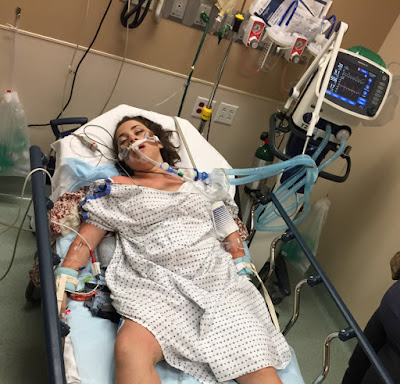
About 18 months ago you may remember quite a remarkable story out of the US that got a great deal of coverage right across the world. Hannah Lottritz, a 21-year-old from Nevada, uploaded a photograph of herself on life-support together with a blog entry titled 'Drinking Responsibly' in an effort to warn others about the risks associated with drinking to excess. The article and the photograph went viral with both being picked up by news agencies across the world. The reason behind her decision to share this disturbing image is clearly explained in the opening paragraph of the piece ... "I am writing this because I didn’t realize the importance of drinking responsibly until I was waking up from a coma, and I don't want anyone to go through what my family and I went through. I ask that you share this with your friends, family or anyone who may benefit from reading this. If I can help just one person by sharing my experience, then I will be absolutely ecstatic." Sadl...

"Does my drinking affect how my child drinks? Should we stop drinking or not drink around them?"

Image
One of the talks that I have written to deliver at Information Evenings this year attempts to answer the five top questions I get asked by parents about alcohol based on the most recent research findings. The talk will cover questions about the provision of a 'sip of alcohol', whether allowing a child to drink at a wedding or a NYE celebration is appropriate and the latest information on alcohol and the teen brain. One query that regularly comes up is about the impact, both positive and negative, parental drinking has on a child. Some of the questions I get asked in this area include the following: ·        "Should I stop drinking around my child? Am I sending the wrong message when I drink alcohol?" ·        "We always take a bottle of wine out with us when we go out for dinner. What message is that sending to our kids?" ·        "We don't drink a lot, mainly with meals … is our daughter learning ...

Starting high school: The importance of parents being involved, staying involved and talking to one another

Image
This time last year I wrote an article on the importance of a 'smooth transition' from primary to secondary school. Research has shown that by Year 10, those students who managed to get through this difficult transition period without too many issues are likely to have higher levels of school attendance, better academic results, low behavioural problems and lower rates of substance abuse. What happens in the first few months of high school can play an important role in how their future plays out … I recently read a wonderful research paper by Anne Coffey that discussed the key to a successful transition being 'relationships'. In the article, the author identified a number of potentially 'negative' changes that can occur during the move from primary to high school including the following:  ·        a decline in self-esteem due to changes in learning environment and more demanding schoolwork ·        a "dip in academic perfo...

8 things parents need to tell their teens about alcohol and vomiting

Image
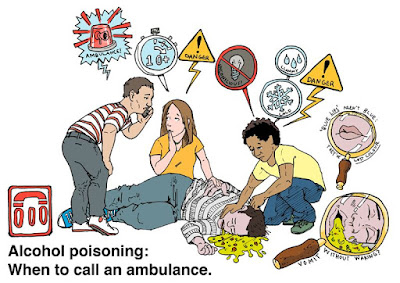
The response to last week's blog that asked parents 'Would your teen know what to do if something went wrong at a party?' was amazing! Well over 20,000 people read the piece over a 2-day period and the content seemed to really resonate with parents. The incredibly sad story of the 15-year-old girl who choked to death on a bed while being watched by four of her friends is particularly powerful and, as a result, many readers forwarded the link to their teens. Amongst all the comments was one that I found particularly interesting: " … Death by vomiting is a real danger. I must have been lucky as a young bloke to not have died. My life was saved several times whilst vomiting unconscious. I had good mates who looked after me. A wife who saved my life three times. I no longer drink at all. The fun aspect disappeared long before I got the help I needed. I don't think all that much has changed over the past 50 odd years ... I quite like young folk. Times change. Kids don...

Would your teen know what to do if something went wrong at a party? Even with the information do they have the 'brain wiring' to respond appropriately?

Image
In her book, The Teenage Brain, Frances Jensen talks about adolescence as being a particularly risky time of life due to their brains still "being wired", resulting in them often finding themselves in potentially dangerous situations and simply not knowing what to do next. She quotes a 2010 study conducted by the British Red Cross that examined how teens react to emergencies involving a friend drinking too much alcohol. "More than 10 percent of all children and young teens between the ages of eleven and sixteen have had to cope at one time with a friend who was sick, injured, or unconscious owing to excessive alcohol consumption. Half of those had to deal with a friend who passed out. More broadly, the survey found that nine out of ten adolescents have had to deal with some kind of crisis involving another person during their teenage years - a head injury, choking, an asthma attack, an epileptic seizure, etc. Forty-four percent of the teens surveyed admitted to panicki...

Parenting, parties and the Christmas holidays: If you have a 14 or 15-year-old, hold on tight - it could be a bumpy ride!

Image
If you speak to teachers, particularly Year Co-ordinators who follow a cohort of students through high school, they will often tell you that they see the biggest change occur in the young people when they return to school after the Christmas holiday period between Years 9 and 10. Sometimes it can be a year earlier or even a year later, but it nearly always seems to occur when the students have returned from that extended summer break. Now you could argue that this is simply due to the length of time the students are away from school but in my experience this behavioural change often appears to be due to a change in parenting that occurs over those summer months, particularly in regards to those young people aged around 14 and 15. The summer break (both before and after the Christmas and New Year holidays) is a time when there are usually lots of parties or gatherings and parents are bombarded by requests to attend this or that event. It's the most social time of the year, for both ...