Posts

Starting high school: The importance of parents being involved, staying involved and talking to one another

Image
This time last year I wrote an article on the importance of a 'smooth transition' from primary to secondary school. Research has shown that by Year 10, those students who managed to get through this difficult transition period without too many issues are likely to have higher levels of school attendance, better academic results, low behavioural problems and lower rates of substance abuse. What happens in the first few months of high school can play an important role in how their future plays out … I recently read a wonderful research paper by Anne Coffey that discussed the key to a successful transition being 'relationships'. In the article, the author identified a number of potentially 'negative' changes that can occur during the move from primary to high school including the following:  ·        a decline in self-esteem due to changes in learning environment and more demanding schoolwork ·        a "dip in academic perfo...

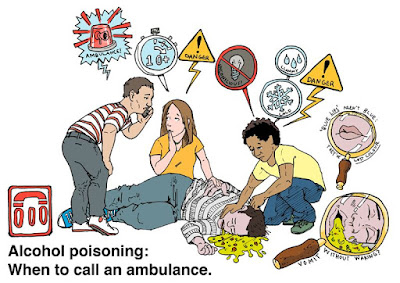
8 things parents need to tell their teens about alcohol and vomiting

Image
The response to last week's blog that asked parents 'Would your teen know what to do if something went wrong at a party?' was amazing! Well over 20,000 people read the piece over a 2-day period and the content seemed to really resonate with parents. The incredibly sad story of the 15-year-old girl who choked to death on a bed while being watched by four of her friends is particularly powerful and, as a result, many readers forwarded the link to their teens. Amongst all the comments was one that I found particularly interesting: " … Death by vomiting is a real danger. I must have been lucky as a young bloke to not have died. My life was saved several times whilst vomiting unconscious. I had good mates who looked after me. A wife who saved my life three times. I no longer drink at all. The fun aspect disappeared long before I got the help I needed. I don't think all that much has changed over the past 50 odd years ... I quite like young folk. Times change. Kids don...

Would your teen know what to do if something went wrong at a party? Even with the information do they have the 'brain wiring' to respond appropriately?

Image
In her book, The Teenage Brain, Frances Jensen talks about adolescence as being a particularly risky time of life due to their brains still "being wired", resulting in them often finding themselves in potentially dangerous situations and simply not knowing what to do next. She quotes a 2010 study conducted by the British Red Cross that examined how teens react to emergencies involving a friend drinking too much alcohol. "More than 10 percent of all children and young teens between the ages of eleven and sixteen have had to cope at one time with a friend who was sick, injured, or unconscious owing to excessive alcohol consumption. Half of those had to deal with a friend who passed out. More broadly, the survey found that nine out of ten adolescents have had to deal with some kind of crisis involving another person during their teenage years - a head injury, choking, an asthma attack, an epileptic seizure, etc. Forty-four percent of the teens surveyed admitted to panicki...

Parenting, parties and the Christmas holidays: If you have a 14 or 15-year-old, hold on tight - it could be a bumpy ride!

Image
If you speak to teachers, particularly Year Co-ordinators who follow a cohort of students through high school, they will often tell you that they see the biggest change occur in the young people when they return to school after the Christmas holiday period between Years 9 and 10. Sometimes it can be a year earlier or even a year later, but it nearly always seems to occur when the students have returned from that extended summer break. Now you could argue that this is simply due to the length of time the students are away from school but in my experience this behavioural change often appears to be due to a change in parenting that occurs over those summer months, particularly in regards to those young people aged around 14 and 15. The summer break (both before and after the Christmas and New Year holidays) is a time when there are usually lots of parties or gatherings and parents are bombarded by requests to attend this or that event. It's the most social time of the year, for both ...

"But that's what happens when you get drunk": Changing the culture around alcohol and sexual assault by talking about 'consent'

Image
This year I have met, or heard from, more young women who have been sexually assaulted when they were drunk than ever before. I have written about this topic many times, often highlighting stories that young women have sent me via email or have bravely chosen to divulge after hearing me speak. Sexual assault is a crime and, as I say to all students, if I am told about a crime I cannot keep it a secret - but to be quite honest, if they're going to approach me and tell me their story, they're usually ready to go the next step. Sadly, however, we know most never report what has happened to them. When I have asked girls why they choose not to say anything, it's always the same story - "But that's what happens when you get drunk, it's just part of the alcohol experience!" Earlier this year I had a girl approach me and tell me that she had been assaulted when drunk. The school was well aware of what had happened and the crime had been reported, mainly due to the...

It's important to say 'no' to your teen, but at the same time, always look for opportunities to say 'yes'!

Image
'No' is one of the most important words you can say to your child. It's a tiny word, but for many people, particularly parents, it can prove incredibly difficult to say. There are books dedicated to the word and its importance, written from a business perspective, in regards to relationships and personal development, as well as the role it plays in parenting. Many of us avoid using the word because we are afraid that it will put us into conflict with someone else, or believing that saying it will somehow change how others view us. Research has found that many parents avoid battles with their children, because they feel that if they say 'no' to them, they will stop loving them. Interestingly, little children seem to have no issues with the word, in fact, toddlers (i.e., the 'terrible twos') tend to scream it constantly! It seems, however, that as we grow up many of us learn to become 'people pleasers' and, as a result, 'no' seems to drop out o...

"You're grounded for life!": Why 'grounding' doesn't usually work and the importance of making sure the 'time fits the crime'!

Image
A few years ago I wrote a blog entry about a young man who approached me after my talk with his first words being "Mr Dillon, I made a big mistake ..." This young man had gone out with friends a few weeks before and had got terribly drunk. He had not intended to get that intoxicated and he claimed that he had never been in such a state before. He was eventually found and taken to the local police station. His mother was called and he was taken home. But it was what happened the next day that he wanted my help on ... I'm paraphrasing, but essentially this was what he said: "I'm grounded until December! That's a really long time. I know I've done the wrong thing but 8 months without being allowed out with my friends is going to be really hard. I'm prepared to take my punishment but do you think there's anything I can do to change my mum's mind?" As I said at the time, if you could have seen this young man's face it would have broken you...