Posts

Good people make bad decsions

As I’m just about to begin my presentations to school communities across the country for 2013 it is quite a coincidence that today I received an email from a remarkable young woman who wanted to share her story with me. I woke up this morning to receive this email: “At the end of 2011 I heard you speak at my school in Brisbane and you were truly captivating. Since that time I've had a pretty extreme life event - very similar to those you recounted during your talk - and was wondering if I could send you a quick email about it? If you ended up retelling my story and it made even one person think again about what they were doing I would be thrilled.” I wrote back immediately and a while later an email arrived that told of the young woman’s journey over the past couple of years. To describe it as harrowing would be an understatement – you name it, she had done it and had suffered the consequences. A girl who obviously had it all – a great school, parents who gave her everything ...
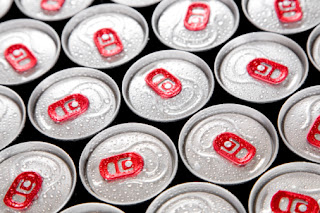
Energy drinks - what are the issues?

Image
There’s been a lot of media coverage recently about the issue of energy drinks. According to some of the press reports (and you never really know how much of what is reported is actually true!), some health experts are calling for energy drinks to be banned and admissions to emergency departments due to these drinks have recently doubled. Energy drinks have become increasingly popular over the past few years and are a huge money-spinner for companies. There are now many brands available and there is great pressure to increase market-share. In the advertising that promotes these products we are told that these drinks will give us an extra boost and there is often the suggestion that there is something contained within the drink that you are not going to find elsewhere. Some products do have additional ingredients (such as guarana), but for most of these drinks it is the caffeine and sugar which are the active ingredients that give these drinks their supposed ‘boost’. Let me start by...

'Strawberry quik': Drug warnings and Facebook

Image
I have recently been contacted by someone who had received a Facebook message warning about a new drug apparently “going around” schools in the US called ‘Strawberry Quick’. It’s a great worry that this story is doing the rounds again, this time on Facebook instead of via emails, but let’s clear it up quickly before it gets out of hand and ends up as a headline in the Daily Telegraph, again …   This is a classic ‘urban myth’ - this time telling the story of an apparent new marketing ploy of methamphetamine manufacturers. When it first appeared in this country, media stories quoted US drug agencies warning Australians to brace for a new wave of strawberry-flavoured amphetamines specifically designed to appeal to juvenile taste-buds. These stories were accompanied by email alerts sent around the country warning parents to be on the lookout for this new form of the drug which was once again being used by ‘drug pushers’ to target their children.   The flavoured drug, known as...

Why don't the ASSAD Surveys' results always match our personal experience?

The 2011 Australian Secondary School Alcohol and Drug (ASSAD) survey was released today and for the next few years these figures will be used by a wide variety of people to describe what is going on amongst high school students in terms of alcohol and other drug use. I use the ASSAD data all the time - it is a great piece of research that provides some really useful information - but the response I get from many people I speak to, whether it be teachers, parents or those who work with young people in other sectors, is that the results simply don't match their experience. For the purposes of this post I'll be looking at just the illicit drug use, we'll leave the alcohol, tobacco and over-the-counter information for another day ... Once again, the data shows quite clearly that the majority of Australian secondary school students do not use illicit drugs. Here are just a few of the key findings: in terms of lifetime drug use, rates were either stable or decreasing for all ill...

'Sheesha' smoking: Why should we be worried?

Image
In the week that the world-first initiative of the plain packaging of cigarettes has finally been introduced in Australia, we should be incredibly proud of our achievements in the tobacco area. We have one of the lowest rates of daily smoking in the world and data that we have available from the latest 2011 ASSAD Survey indicates that we continue to see an upward trend in the number of Australian high school students who have never smoked cigarettes. That said, I am seeing a very worrying trend across the country that may be removing some of the existing barriers around smoking - the increasing popularity of 'sheesha' smoking. About six months ago I was at a school in Sydney's eastern suburbs when a Year 10 student asked me about the harms associated with smoking a 'hubbly bubbly'. He had gone to a friend's 15th birthday and the parents of the birthday boy had given their son and his friends a sheesha to use at the party! I was absolutely floored - I couldn'...

The adolescent brain and alcohol

Image
Since the 1990s we have learnt a great deal about the developing brain. It was once believed that this complex organ finished developing around the age of 15 years, we now know it takes much longer and that during the dynamic changes that occur during adolescence drinking alcohol can seriously damage long and short-term growth processes. Before we look at alcohol's effects on the developing brain - let's first discuss what is different about a teenage mind. We all know that adolescence can be a troubled time but now we are beginning to understand why this is the case - and it's not just all about raging hormones and puberty! Certain parts of the brain are underdeveloped, particularly the prefrontal cortex (the part that deals with judgement, decision-making, planning and impulse control) and when teens make decisions they tend to use an alternative section - the amygdala (the emotional part of their brain). This results in a decrease in reasoned thinking and an increase in ...

What are 'bath salts'?

There are so many urban myths that exist to do with drugs and drug culture. It is difficult to work out how and where many of them originated, whereas others can be pinpointed exactly, as is the case with so-called 'bath salts'. What is repeatedly mentioned in media stories to do with the new range of 'legal highs' or 'synthetics' is the story of a US man who reportedly stripped a homeless man naked and then attempted to chew his face off whilst under the influence of 'bath salts'. Witnesses described the man as a "zombie" and when the police finally arrived on the scene and intervened they shot and killed him. The attack was caught on video and, not surprisingly, the media had a field day. When the story broke there had been no toxicology conducted so no-one really knew what had caused this bizarre attack but that didn't stop the police or media from making wild claims. Nicknamed the 'Miami Zombie', Rudy Eugene became the poster bo...