Posts

It's important to say 'no' to your teen, but at the same time, always look for opportunities to say 'yes'!

Image
'No' is one of the most important words you can say to your child. It's a tiny word, but for many people, particularly parents, it can prove incredibly difficult to say. There are books dedicated to the word and its importance, written from a business perspective, in regards to relationships and personal development, as well as the role it plays in parenting. Many of us avoid using the word because we are afraid that it will put us into conflict with someone else, or believing that saying it will somehow change how others view us. Research has found that many parents avoid battles with their children, because they feel that if they say 'no' to them, they will stop loving them. Interestingly, little children seem to have no issues with the word, in fact, toddlers (i.e., the 'terrible twos') tend to scream it constantly! It seems, however, that as we grow up many of us learn to become 'people pleasers' and, as a result, 'no' seems to drop out o...

"You're grounded for life!": Why 'grounding' doesn't usually work and the importance of making sure the 'time fits the crime'!

Image
A few years ago I wrote a blog entry about a young man who approached me after my talk with his first words being "Mr Dillon, I made a big mistake ..." This young man had gone out with friends a few weeks before and had got terribly drunk. He had not intended to get that intoxicated and he claimed that he had never been in such a state before. He was eventually found and taken to the local police station. His mother was called and he was taken home. But it was what happened the next day that he wanted my help on ... I'm paraphrasing, but essentially this was what he said: "I'm grounded until December! That's a really long time. I know I've done the wrong thing but 8 months without being allowed out with my friends is going to be really hard. I'm prepared to take my punishment but do you think there's anything I can do to change my mum's mind?" As I said at the time, if you could have seen this young man's face it would have broken you...

'Old-fashioned parenting': What does that really mean and why is the term now increasingly being used as an insult?

Image
This week a dear friend of mine attended one of my parent sessions. Jo has heard me speak many times over the past 18 years but her reaction to this talk was very different than it had been in the past. She and her husband are currently raising their 15-year-old grandson (having had him since he was a baby) and although they've been through the adolescent years before with their children (many years ago), they're now going through it all again – this time feeling far more pressure than before. When I finished my presentation she turned to others in the audience, took a great big sigh and said "I'm so pleased I came tonight, I am constantly being told that I am being 'old-fashioned' when it comes to my parenting – I now feel like I actually may be doing the right thing!" We had a bit of a chat about what she thought 'old-fashioned parenting' actually meant and in what context the term was being used. Jo's response reflected what I am hearing acr...

'Loving' or 'indulgent'? 'Child-centred' parenting and its implications for a child's future socializing and potential alcohol and other drug use

Image
I've given a lot of talks over the years, to a wide variety of audiences but over the past couple of weeks I've delivered a number of presentations specifically targeting parents of primary school-aged children. I've offered similar talks to schools over the years, but of the handful I've delivered, they've attracted very small audiences. It's always a battle to get parents to attend any presentation around alcohol and other drugs (AOD), but if they do come, it's usually when they believe their child is starting to be exposed to the issue, i.e., they're starting to be invited to parties and gatherings or they have actually discovered that their teen is drinking. I think most parents of primary school-aged children who see an AOD talk advertised believe that this is something they're going to have to worry about in the future and brush it off, saying that they'll attend something like that when it becomes an issue. Of course, prevention is better ...

Is there a difference between a 15 and a 15⅟₂-year-old? Do parents use the 'extra half' to justify behaviour they don't feel comfortable with?

Image
I am considering writing another book at the moment (it's been almost 8 years since the last one was published!) and so have been taking special note of the questions I am being asked by those attending my seminars. As regular readers would know, sometimes a particular question just comes right out and hits me between the eyes, screaming to be written up as a blog entry. Over the last couple of weeks, however, I have been noticing a particular way that questions have been asked by some of the parents after my talks that I find fascinating and I thought was worth discussing ... Recently a mother came up to me after a Parent Information Evening and asked me the following question: "My 15 ⅟₂-year-old daughter is going to parties and I know she is drinking. She knows our rules around this issue and we have never caught her with alcohol but we know it is happening. My husband and I don't like her going behind our backs and we're frightened other things are going to start be...

Parental monitoring: Getting it right for your family - your kids, your decisions!

Image
I was speaking to a teacher recently who had just returned from maternity leave. I have known Cherie for years and it was wonderful to see her so happy (although still a little tired), with motherhood being everything she had expected and so much more ... When I saw her last year she was elbow-deep in baby books, trying to absorb everything she could about how to get the whole 'parenting thing' right and while we were talking I asked her if there was one book or other resource that she had found most useful when it came to what went down in real-life. Cherie's answer didn't really surprise me but it was so succinct and 'real', I asked if I could use it to highlight a key issue I think all parents need to remember regardless of their child's age ... "My head was practically exploding with all the advice that I was given or read about being a good parent. In the end, my husband and I took it all, tried to absorb what we thought was useful and would work f...

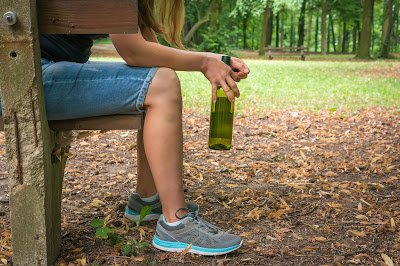
How should parents respond to 'emotional blackmail'? "If you don't give me alcohol, I'll get it from somewhere else and drink in a park!"

Image
If you look at the latest secondary school student data, parents continue to be the most common source of alcohol amongst young people, with 37.9% of current drinkers aged 12-17 years reporting this to be the case. Friends (22%) and 'someone else' (19%) were the next most likely responses, with siblings (8.7%) and 'took it from home' (4.7%) being the least likely sources. As I always say, what you do with your teen around drinking is completely your business and if you believe that providing them with alcohol is the right thing to do, whatever your reason, then all power to you! There are many parents who believe that giving their child a glass of alcohol with a meal in a family environment is the best way to teach 'responsible drinking'. The available evidence in this area does not necessarily support that view, but if that's what you believe and it feels right for your family - go for it! When it comes to giving a teen alcohol to take to a party on a Satur...